Note: All data is mock and does not represent real production figures. Confidential details have been removed.
Genomics & Diagnostics Client Project

Strategic Vision for Future of Lab OS

Project: Strategy & Project Proposal

Project Year: 2019 – 2020

Client: Confidential
Summary

The global lab hardware client wanted to envision their new cloud-based OS in 2030. To unify fragmented software ecosystems across diagnostics devices, we provided a research-driven vision proposal, shaped with the long-term digital strategy, future use cases. This project led to securing follow-up 200K EUR project budget for UX development for their upcoming diagnostic device Software.


As a PM, I managed the client and project planning and delivery. Also, I led design research and cross-functioning team ideation, facilitated vision workshop, and directed the future scenarios visualisation.

Client: Global Laboratory Hardware Manufacturer in U.S.

Company: Indeed Innovation GmbH

Team: Myself (Design Researcher & PM), Industrial Designer, Software Developer, Firmware Engineer

Key Responsibilities:

  • Project scoping, planning and delivery
  • Team coordination and stakeholder management
  • Strategy research and analysis
  • User and market design research
  • Workshop design and facilitation
  • Project Proposal and acquisition

Context

Digitalise Diagnostics Experience with OS

Our client, a global lab hardware manufacturer, had grown rapidly through acquisitions, that brought a fragmented ecosystem of instruments with varying firmware and software.

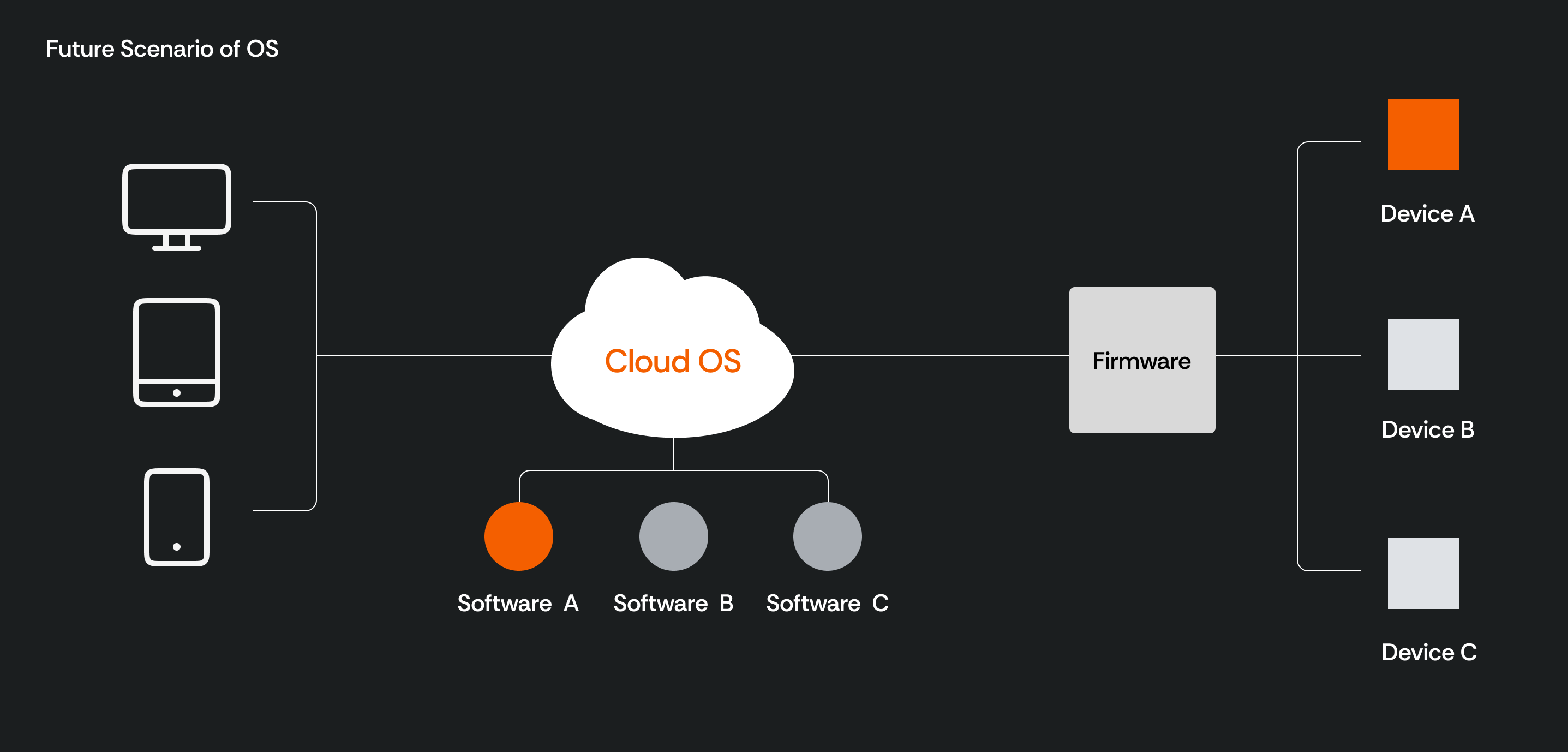
To enable connected experience, their digital department aimed a cloud-based OS for 2030: a platform to create protocols, capture data, and run diagnostics across genomics and drug discovery devices. Before developing their first software for one of their hardware devices, built on a unified firmware, they engaged us to explore future use cases and co-develop a 10-year roadmap for a scalable digital ecosystem.

Our Mission | Visioning Future OS

What are opportunities with the future OS, a connective layer across the hardware portfolio?

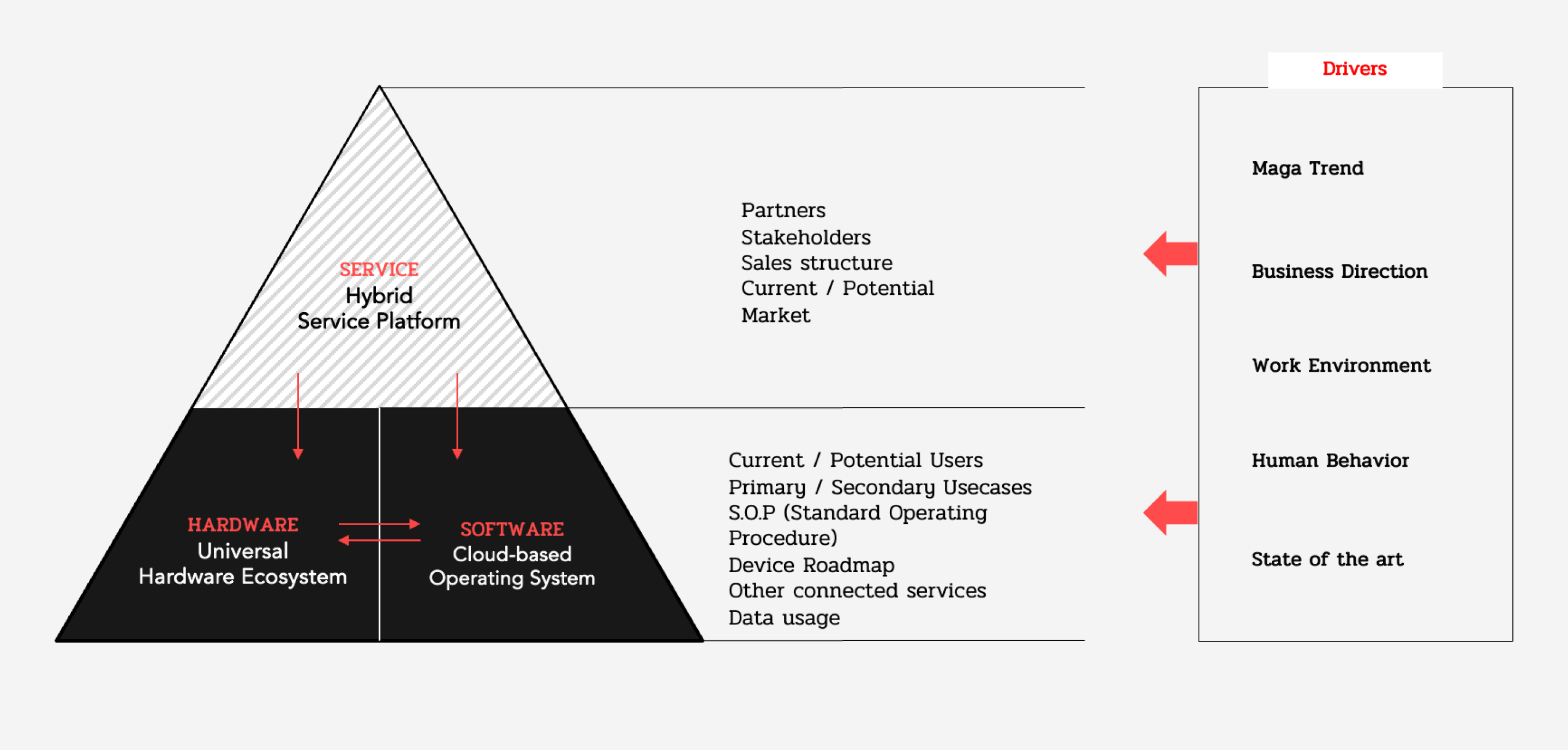
To envision future business models and opportunities, we explored diverse future drivers across industry, people, and business landscapes.
With OS, the connective layer for hardware portfolio, we envisioned its hybrid role for hardware digital operation and for a digital ecosystem for holistic user experience.
Our Recommendation

SaaS as the Future Business Model
Building an open platform service ecosystem on the strong legacy of the client’s hardware portfolio.

Key Drivers

  • The pandemic accelerated the shift from in-person to virtual interactions
  • Market trends increasingly value digital services over physical assets
  • Scalable automation with digitalisation enables operational efficiency and new service models


Business Impact

  • Customer Experience
    • Digital tools enhance collaboration across institutes, hospitals, and universities
    • Measurable improvements in workflow efficiency and overall customer satisfaction
  • Customer Loyalty
    • Continuous digital touchpoints strengthen engagement and retention
    • Subscription models for universities and research institutes create long-term customer pipelines
    • Community-driven services evolve through real user feedback and data insights
  • Product Scale
    • SaaS model enables broader market reach and recurring revenue streams
    • Data-driven insights support continuous product improvement and strategic growth

Ideation

What If? Vision Storyboards for 2030

To inspire our client to imagine the future scenario and business benefit, we visualised the recommendations into storyboards that shows what the role of OS could be, how users could interact with the digital ecosystem, and what value we could unlock and innovate.

Scenario 1. All-in-One Service Plan

What if a complete service offers users with the creation of software, devices, data and the team management enabled by web services?

Scenario 2. Automated Workflow

What if Intelligent workflow suggests for the device connection, protocol and step creations and inspirations from the community?

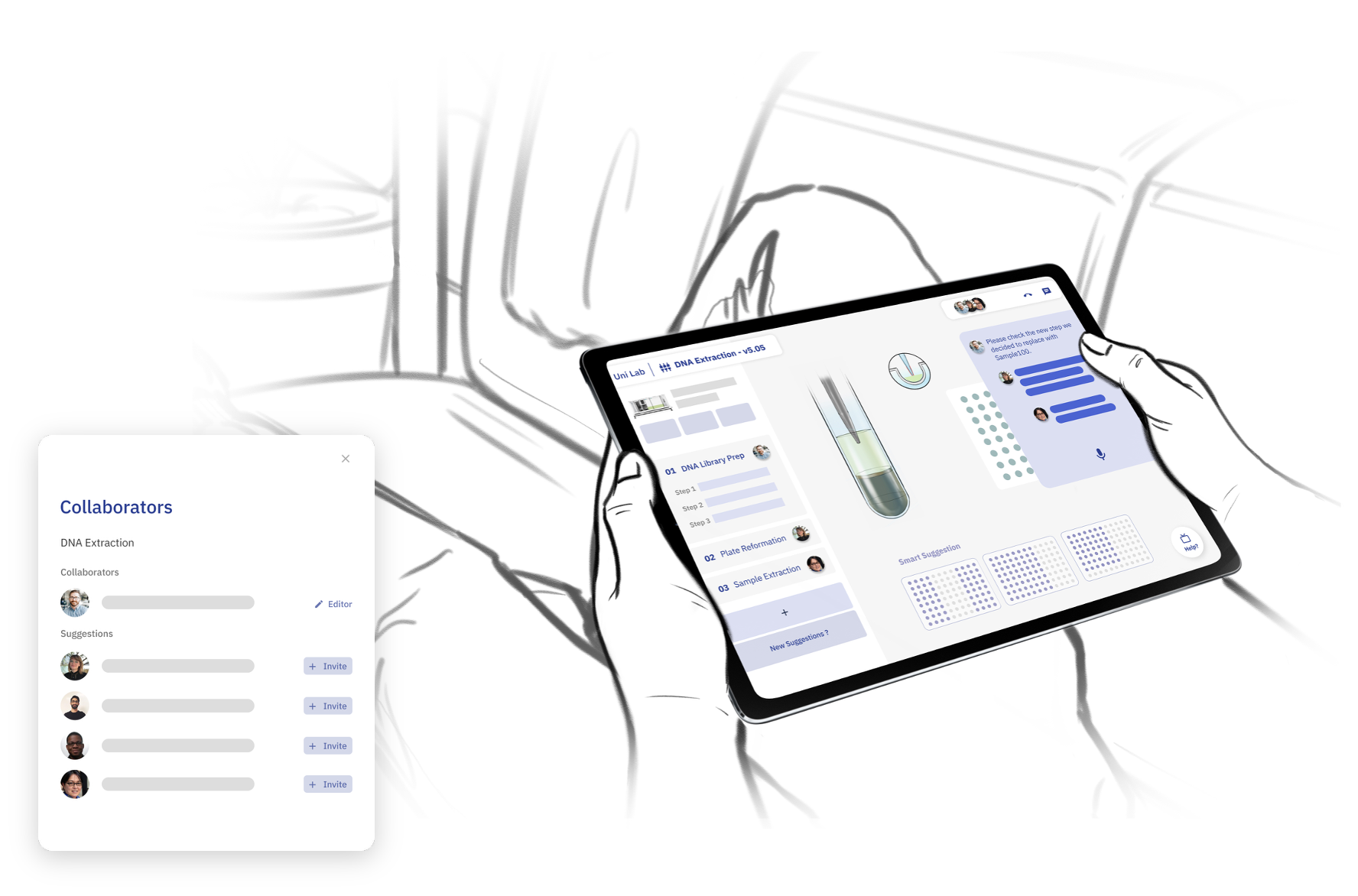
Scenario 3. Virtual Team Collaboration

What if connected digital service enables real-tme vitual team collaboration and simulation of the steps to create the data not only efficiently but also accurately?
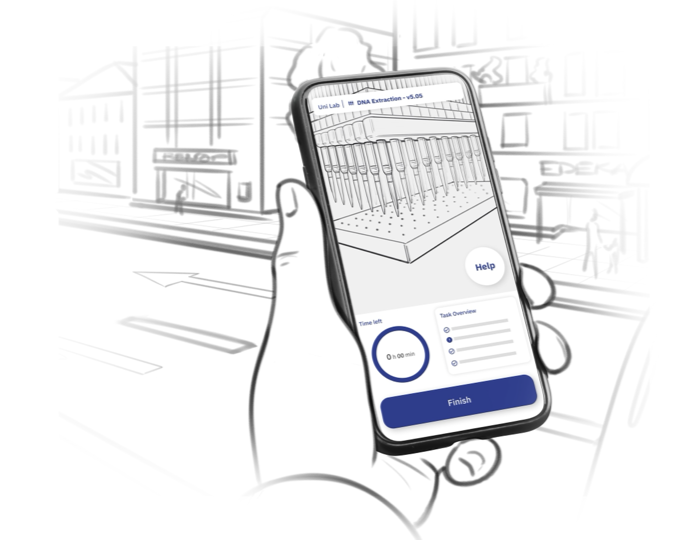
Scenario 4. Real-time mobile monitoring

What if ensuring trust through real-time monitoring and explanable information during the device process?
Scenario 5. Data Analysis via plug-in Integration

What if a transparent, plug‑in‑enabled data dashboard allowed users to seamlessly track performance and progress, which provides insights for improvement?

Outcome: Usecase & Roadmap
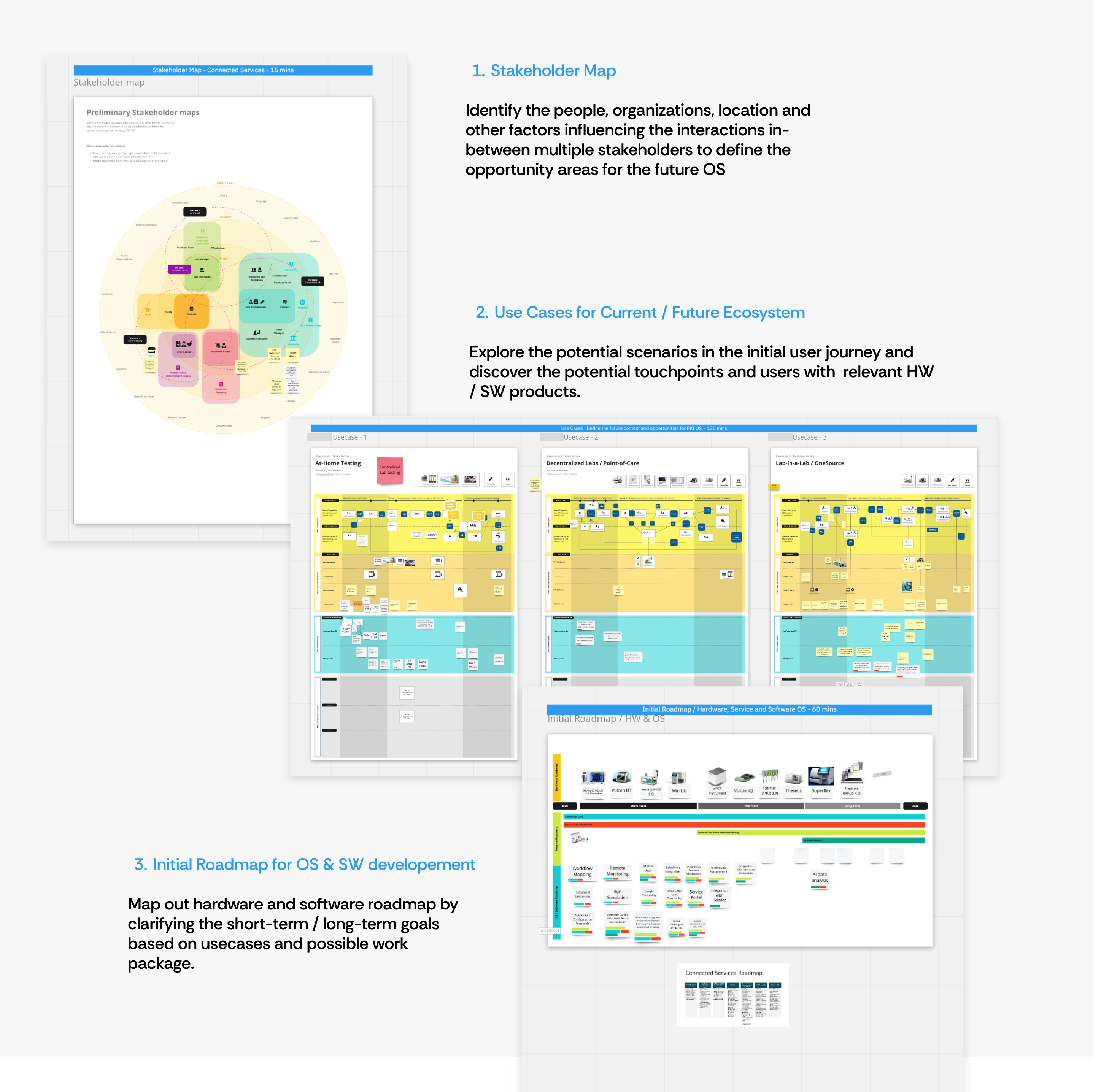
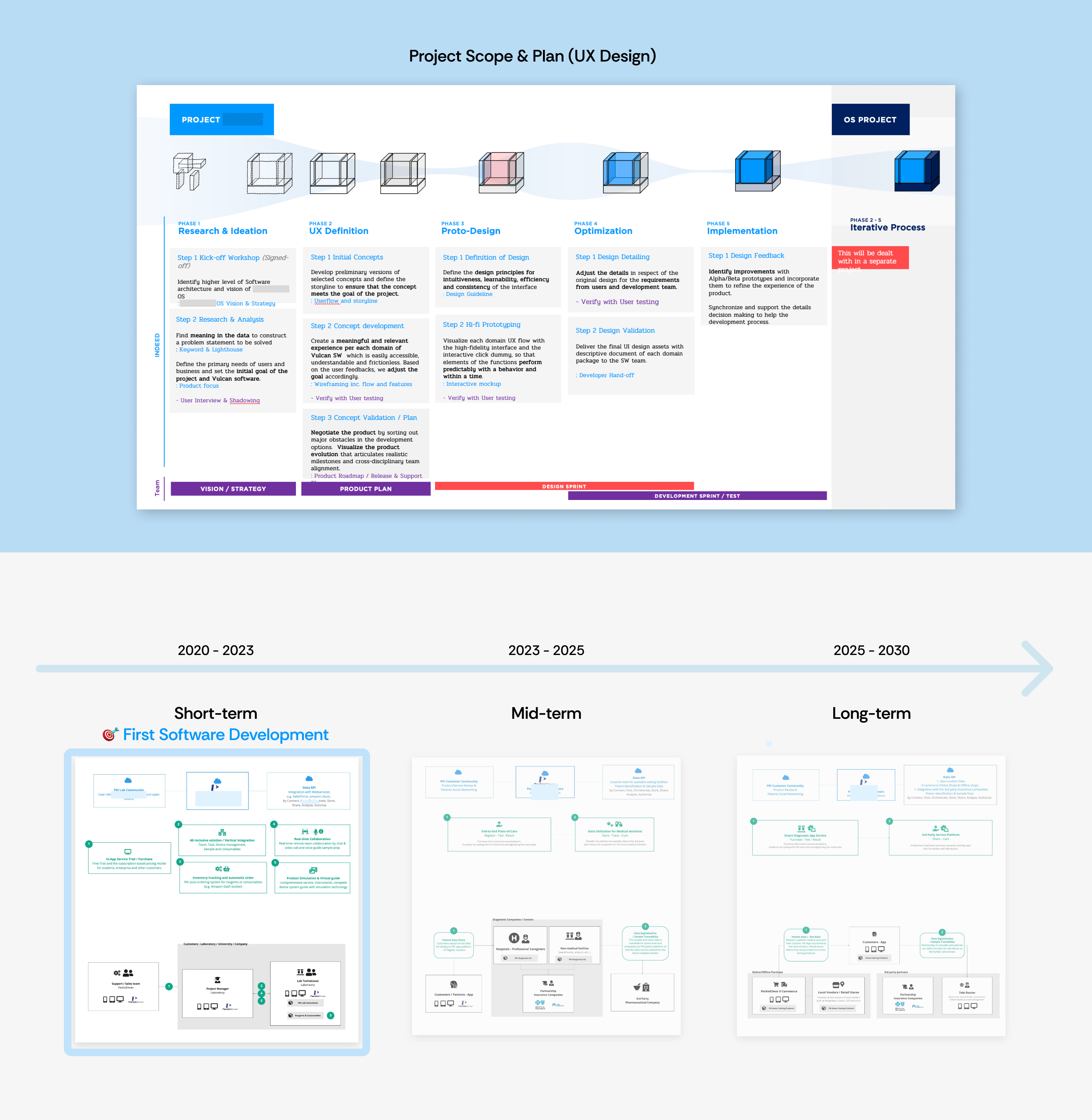
How? Prioritise use cases for the next 10 years

After delivering our future scenarios and vision, we had a request for following workshop to discuss 10 years roadmap. Here, our focus shifted from “what if” to “how.”

Together with engineers, designers, and business leads, we explored their existing and probable business by co-creating with our clients:

Follow-up Result

New Project acquisition with 200K EUR budget

After vision delivery with the outcome:

  • Future OS concept sketches & system map
  • Stakeholder map & use case scenarios
  • Product roadmap (short-/mid-/long-term)

✅ I proposed a project for pilot design & development for their first software proof-of-concept for a diagnostic device. The proposal was approved by the client and we secured a €200K follow-up budget for UX development and POC design for the next 10 months

Archive: Research Process

To understand the industry status quo and to build industry knowledge and user & market insights, We combined three research angles to ground our vision:

A. The Current Business & Hardware Roadmap

By mapping the client’s hardware roadmap and exploring how a future OS could serve it, we captured some meaningful findings

Key Findings

  • Many of the client’s customers including universities, hospitals, and research labs, purchase genomic diagnostics devices without realising they come from the same company, due to disconnected software and fragmented service experiences.
  • A connected digital service layer across devices could shift the business model from standalone hardware units to an integrated diagnostics offering powered by a unified OS.

B. Benchmark & Market: SaaS as the future business model

We explored how other hardware-first companies were evolving, especially those adopting SaaS models and cloud-native platforms.

Key Findings

  • Market leaders in healthcare have introduced app suites and operating systems to transform customer relationships and service ecosystems, evolving beyond traditional hardware-focused offerings (e.g. Philips).
  • In the hardware prototyping industry, companies are shifting toward digital subscription models that offer end-to-end workflows targeting universities and institutes through free access - a strategic move to nurture future user bases. (e.g. Onshape).
  • Both hardware and software require continuous updates, maintenance, and support through digital service could add benefit of long-term engagement.
  1. Reflection: after stormy 4 months

This was one of the most complex and rewarding projects I’ve led. It was deeply research-driven and focused on communication and alignment for a strategic and coherent business model. how we could successfully deliver and impact? there are a few key lessons I took away:
📚 Seek for help to overcome the steep learning curve: The biggest thing I took away from this phase was this: being honest about what you don’t know builds trust. Coming from outside the medical field, I realised that while I didn’t need to be a domain expert, but I did need to understand the language, habits, and expectations of those who were. So I asked questions - even the basic ones. I reached out to experts, asked the client for clarification (more than once), and dug into papers and internal documents until the puzzle started to come together. This efforts paid off along our project journey and collaboration.


🤝 Lead cross-functional team by aligning A-Z: The project team was made up of senior expert members: heads of engineering, firmware, and software development, which brought both depth and challenge. It wasn’t always easy to align them due to different background and perspectives, but through continuous exchange, shared whiteboards, and structured conversations, we built a shared language that helped us converge on clear, feasible, and meaningful outcomes.


🎯 Blueocean for healthcare innovation: What struck me most was the transformative potential of design in the med-tech space. It’s an industry where digitalisation is still in early stages, often constrained by legacy systems and conservative views on design. But through this project, I saw how visualisation and strategic design research could unlock new ways of thinking.


🤲 Real meaning of Co-creation: As a consultant, I’ve sometimes fallen into the trap of trying to solving problems for the client, instead of with them. We invited them to take part in “homework” between sessions, and to our surprise, they responded with genuine energy and excitement. Over time, they stopped seeing themselves as just the client, and showed up as true collaborators. That shared ownership didn’t just improve the outcome, and it deepened the trust and built a long-term partnership.

Back to the top

All Rights Reserved

Note: All data is mock and does not represent real production figures. Confidential details have been removed.

Genomics & Diagnostics Client Project

Strategic Vision for Future of Lab OS

Project: Strategy & Project Proposal

Project Year: 2019 – 2020

Client: Confidential

Summary

The global lab hardware client wanted to envision their new cloud-based OS in 2030. To unify fragmented software ecosystems across diagnostics devices, we provided a research-driven vision proposal, shaped with the long-term digital strategy, future use cases. This project led to securing follow-up 200K EUR project budget for UX development for their upcoming diagnostic device Software.


As a PM, I managed the client and project planning and delivery. Also, I led design research and cross-functioning team ideation, facilitated vision workshop, and directed the future scenarios visualisation.

Client: Global Laboratory Hardware Manufacturer in U.S.

Company: Indeed Innovation GmbH

Team: Myself (Design Researcher & PM), Industrial Designer, Software Developer, Firmware Engineer

Key Responsibilities:

  • Project scoping, planning and delivery
  • Team coordination and stakeholder management
  • Strategy research and analysis
  • User and market design research
  • Workshop design and facilitation
  • Project Proposal and acquisition

Context

Digitalise Diagnostics Experience with OS

Our client, a global lab hardware manufacturer, had grown rapidly through acquisitions, that brought a fragmented ecosystem of instruments with varying firmware and software.

To enable connected experience, their digital department aimed a cloud-based OS for 2030: a platform to create protocols, capture data, and run diagnostics across genomics and drug discovery devices. Before developing their first software for one of their hardware devices, built on a unified firmware, they engaged us to explore future use cases and co-develop a 10-year roadmap for a scalable digital ecosystem.

Our Mission | Visioning Future OS

What are opportunities with the future OS, a connective layer across the hardware portfolio?

To envision future business models and opportunities, we explored diverse future drivers across industry, people, and business landscapes.
With OS, the connective layer for hardware portfolio, we envisioned its hybrid role for hardware digital operation and for a digital ecosystem for holistic user experience.

Our Recommendation

SaaS as the Future Business Model
Building an open platform service ecosystem on the strong legacy of the client’s hardware portfolio.

Key Drivers

  • The pandemic accelerated the shift from in-person to virtual interactions
  • Market trends increasingly value digital services over physical assets
  • Scalable automation with digitalisation enables operational efficiency and new service models


Business Impact

  • Customer Experience
    • Digital tools enhance collaboration across institutes, hospitals, and universities
    • Measurable improvements in workflow efficiency and overall customer satisfaction
  • Customer Loyalty
    • Continuous digital touchpoints strengthen engagement and retention
    • Subscription models for universities and research institutes create long-term customer pipelines
    • Community-driven services evolve through real user feedback and data insights
  • Product Scale
    • SaaS model enables broader market reach and recurring revenue streams
    • Data-driven insights support continuous product improvement and strategic growth

Ideation

What If? Vision Storyboards for 2030

To inspire our client to imagine the future scenario and business benefit, we visualised the recommendations into storyboards that shows what the role of OS could be, how users could interact with the digital ecosystem, and what value we could unlock and innovate.

Scenario 1. All-in-One Service Plan

What if a complete service offers users with the creation of software, devices, data and the team management enabled by web services?

Scenario 2. Automated Workflow

What if Intelligent workflow suggests for the device connection, protocol and step creations and inspirations from the community?

Scenario 3. Virtual Team Collaboration

What if connected digital service enables real-tme vitual team collaboration and simulation of the steps to create the data not only efficiently but also accurately?

Scenario 4. Real-time mobile monitoring

What if ensuring trust through real-time monitoring and explanable information during the device process?

Scenario 5. Data Analysis via plug-in Integration

What if a transparent, plug‑in‑enabled data dashboard allowed users to seamlessly track performance and progress, which provides insights for improvement?

Outcome: Usecase & Roadmap

How? Prioritise use cases for the next 10 years

After delivering our future scenarios and vision, we had a request for following workshop to discuss 10 years roadmap. Here, our focus shifted from “what if” to “how.”

Together with engineers, designers, and business leads, we explored their existing and probable business by co-creating with our clients:

Follow-up Result

New Project acquisition with 200K EUR budget

After vision delivery with the outcome:

  • Future OS concept sketches & system map
  • Stakeholder map & use case scenarios
  • Product roadmap (short-/mid-/long-term)

✅ I proposed a project for pilot design & development for their first software proof-of-concept for a diagnostic device. The proposal was approved by the client and we secured a €200K follow-up budget for UX development and POC design for the next 10 months

Archive: Research Process

To understand the industry status quo and to build industry knowledge and user & market insights, We combined three research angles to ground our vision:

A. The Current Business & Hardware Roadmap

By mapping the client’s hardware roadmap and exploring how a future OS could serve it, we captured some meaningful findings

Key Findings

  • Many of the client’s customers including universities, hospitals, and research labs, purchase genomic diagnostics devices without realising they come from the same company, due to disconnected software and fragmented service experiences.
  • A connected digital service layer across devices could shift the business model from standalone hardware units to an integrated diagnostics offering powered by a unified OS.

B. Benchmark & Market: SaaS as the future business model

We explored how other hardware-first companies were evolving, especially those adopting SaaS models and cloud-native platforms.

Key Findings

  • Market leaders in healthcare have introduced app suites and operating systems to transform customer relationships and service ecosystems, evolving beyond traditional hardware-focused offerings (e.g. Philips).
  • In the hardware prototyping industry, companies are shifting toward digital subscription models that offer end-to-end workflows targeting universities and institutes through free access - a strategic move to nurture future user bases. (e.g. Onshape).
  • Both hardware and software require continuous updates, maintenance, and support through digital service could add benefit of long-term engagement.
  1. Reflection: after stormy 4 months

This was one of the most complex and rewarding projects I’ve led. It was deeply research-driven and focused on communication and alignment for a strategic and coherent business model. how we could successfully deliver and impact? there are a few key lessons I took away:
📚 Seek for help to overcome the steep learning curve: The biggest thing I took away from this phase was this: being honest about what you don’t know builds trust. Coming from outside the medical field, I realised that while I didn’t need to be a domain expert, but I did need to understand the language, habits, and expectations of those who were. So I asked questions - even the basic ones. I reached out to experts, asked the client for clarification (more than once), and dug into papers and internal documents until the puzzle started to come together. This efforts paid off along our project journey and collaboration.


🤝 Lead cross-functional team by aligning A-Z: The project team was made up of senior expert members: heads of engineering, firmware, and software development, which brought both depth and challenge. It wasn’t always easy to align them due to different background and perspectives, but through continuous exchange, shared whiteboards, and structured conversations, we built a shared language that helped us converge on clear, feasible, and meaningful outcomes.


🎯 Blueocean for healthcare innovation: What struck me most was the transformative potential of design in the med-tech space. It’s an industry where digitalisation is still in early stages, often constrained by legacy systems and conservative views on design. But through this project, I saw how visualisation and strategic design research could unlock new ways of thinking.


🤲 Real meaning of Co-creation: As a consultant, I’ve sometimes fallen into the trap of trying to solving problems for the client, instead of with them. We invited them to take part in “homework” between sessions, and to our surprise, they responded with genuine energy and excitement. Over time, they stopped seeing themselves as just the client, and showed up as true collaborators. That shared ownership didn’t just improve the outcome, and it deepened the trust and built a long-term partnership.

Back to the top

All Rights Reserved

Note: All data is mock and does not represent real production figures. Confidential details have been removed.

Genomics & Diagnostics Client Project

Strategic Vision for Future of Lab OS

Project: Strategy & Project Proposal

Project Year: 2019 – 2020

Client: Confidential

Summary

The global lab hardware client wanted to envision their new cloud-based OS in 2030. To unify fragmented software ecosystems across diagnostics devices, we provided a research-driven vision proposal, shaped with the long-term digital strategy, future use cases. This project led to securing follow-up 200K EUR project budget for UX development for their upcoming diagnostic device Software.


As a PM, I managed the client and project planning and delivery. Also, I led design research and cross-functioning team ideation, facilitated vision workshop, and directed the future scenarios visualisation.

Client: Global Laboratory Hardware Manufacturer in U.S.

Company: Indeed Innovation GmbH

Team: Myself (Design Researcher & PM), Industrial Designer, Software Developer, Firmware Engineer

Key Responsibilities:

  • Project scoping, planning and delivery
  • Team coordination and stakeholder management
  • Strategy research and analysis
  • User and market design research
  • Workshop design and facilitation
  • Project Proposal and acquisition

Context

Digitalise Diagnostics Experience with OS

Our client, a global lab hardware manufacturer, had grown rapidly through acquisitions, that brought a fragmented ecosystem of instruments with varying firmware and software.

To enable connected experience, their digital department aimed a cloud-based OS for 2030: a platform to create protocols, capture data, and run diagnostics across genomics and drug discovery devices. Before developing their first software for one of their hardware devices, built on a unified firmware, they engaged us to explore future use cases and co-develop a 10-year roadmap for a scalable digital ecosystem.

Our Mission | Visioning Future OS

What are opportunities with the future OS, a connective layer across the hardware portfolio?

To envision future business models and opportunities, we explored diverse future drivers across industry, people, and business landscapes.
With OS, the connective layer for hardware portfolio, we envisioned its hybrid role for hardware digital operation and for a digital ecosystem for holistic user experience.

Our Recommendation

SaaS as the Future Business ModelBuilding an open platform service ecosystem on the strong legacy of the client’s hardware portfolio.

Key Drivers

  • The pandemic accelerated the shift from in-person to virtual interactions
  • Market trends increasingly value digital services over physical assets
  • Scalable automation with digitalisation enables operational efficiency and new service models


Business Impact

  • Customer Experience
    • Digital tools enhance collaboration across institutes, hospitals, and universities
    • Measurable improvements in workflow efficiency and overall customer satisfaction
  • Customer Loyalty
    • Continuous digital touchpoints strengthen engagement and retention
    • Subscription models for universities and research institutes create long-term customer pipelines
    • Community-driven services evolve through real user feedback and data insights
  • Product Scale
    • SaaS model enables broader market reach and recurring revenue streams
    • Data-driven insights support continuous product improvement and strategic growth

Ideation

What If? Vision Storyboards for 2030

To inspire our client to imagine the future scenario and business benefit, we visualised the recommendations into storyboards that shows what the role of OS could be, how users could interact with the digital ecosystem, and what value we could unlock and innovate.

Scenario 1. All-in-One Service Plan

What if a single subscription could provide everything: hardware orders, digital software operations, data management, and team coordination, enabled by a SaaS platform??

Scenario 2. Automated Workflow

What if Intelligent workflow suggests for the device connection, protocol and step creations and inspirations from the community?

Scenario 3. Virtual Team Collaboration

What if connected digital service enables real-tme vitual team collaboration and simulation of the steps to create the data not only efficiently but also accurately?

Scenario 4. Real-time mobile monitoring

What if ensuring trust through real-time monitoring and explanable information during the device process?

Scenario 5. Data Analysis via plug-in Integration

What if a transparent, plug‑in‑enabled data dashboard allowed users to seamlessly track performance and progress, which provides insights for improvement?

Outcome: Usecase & Roadmap

How? Prioritise use cases for the next 10 years

After delivering our future scenarios and vision, we had a request for following workshop to discuss 10 years roadmap. Here, our focus shifted from “what if” to “how.”

Together with engineers, designers, and business leads, we explored their existing and probable business by co-creating with our clients:

Follow-up Result

New Project acquisition with 200K EUR budget

After vision delivery with the outcome:

  • Future OS concept sketches & system map
  • Stakeholder map & use case scenarios
  • Product roadmap (short-/mid-/long-term)

✅ I proposed a project for pilot design & development for their first software proof-of-concept for a diagnostic device. The proposal was approved by the client and we secured a €200K follow-up budget for UX development and POC design for the next 10 months

Archive: Research Process

To understand the industry status quo and to build industry knowledge and user & market insights, We combined three research angles to ground our vision:

A. The Current Business & Hardware Roadmap

By mapping the client’s hardware roadmap and exploring how a future OS could serve it, we captured some meaningful findings

Key Findings

  • Many of the client’s customers including universities, hospitals, and research labs, purchase genomic diagnostics devices without realising they come from the same company, due to disconnected software and fragmented service experiences.
  • A connected digital service layer across devices could shift the business model from standalone hardware units to an integrated diagnostics offering powered by a unified OS.

B. Benchmark & Market: SaaS as the future business model

We explored how other hardware-first companies were evolving, especially those adopting SaaS models and cloud-native platforms.

Key Findings

  • Market leaders in healthcare have introduced app suites and operating systems to transform customer relationships and service ecosystems, evolving beyond traditional hardware-focused offerings (e.g. Philips).
  • In the hardware prototyping industry, companies are shifting toward digital subscription models that offer end-to-end workflows targeting universities and institutes through free access - a strategic move to nurture future user bases. (e.g. Onshape).
  • Both hardware and software require continuous updates, maintenance, and support through digital service could add benefit of long-term engagement.
  1. Reflection: after stormy 4 months

This was one of the most complex and rewarding projects I’ve led. It was deeply research-driven and focused on communication and alignment for a strategic and coherent business model. how we could successfully deliver and impact? there are a few key lessons I took away:
📚 Seek for help to overcome the steep learning curve: The biggest thing I took away from this phase was this: being honest about what you don’t know builds trust. Coming from outside the medical field, I realised that while I didn’t need to be a domain expert, but I did need to understand the language, habits, and expectations of those who were. So I asked questions - even the basic ones. I reached out to experts, asked the client for clarification (more than once), and dug into papers and internal documents until the puzzle started to come together. This efforts paid off along our project journey and collaboration.


🤝 Lead cross-functional team by aligning A-Z: The project team was made up of senior expert members: heads of engineering, firmware, and software development, which brought both depth and challenge. It wasn’t always easy to align them due to different background and perspectives, but through continuous exchange, shared whiteboards, and structured conversations, we built a shared language that helped us converge on clear, feasible, and meaningful outcomes.


🎯 Blueocean for healthcare innovation: What struck me most was the transformative potential of design in the med-tech space. It’s an industry where digitalisation is still in early stages, often constrained by legacy systems and conservative views on design. But through this project, I saw how visualisation and strategic design research could unlock new ways of thinking.


🤲 Real meaning of Co-creation: As a consultant, I’ve sometimes fallen into the trap of trying to solving problems for the client, instead of with them. We invited them to take part in “homework” between sessions, and to our surprise, they responded with genuine energy and excitement. Over time, they stopped seeing themselves as just the client, and showed up as true collaborators. That shared ownership didn’t just improve the outcome, and it deepened the trust and built a long-term partnership.

Back to the top

All Rights Reserved